
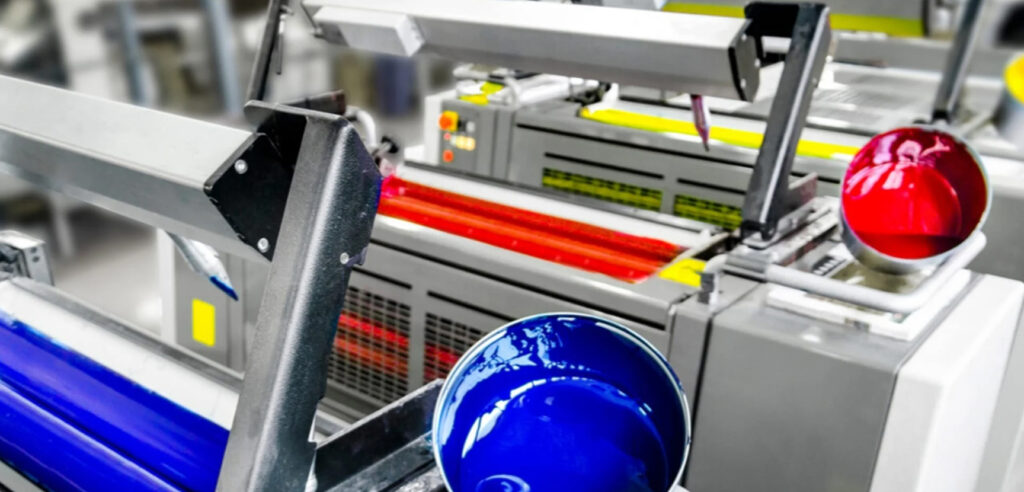
Ink transferability refers to the ability of printing ink to be effectively transferred through the various components of a printing press and ultimately onto the substrate (such as paper or other materials). This property is crucial in determining the quality and consistency of the printed image. Transferability involves several stages, including the ink’s movement from the ink fountain to the rollers, from the rollers to the printing plate, and finally from the plate to the substrate.
Key Factors Influencing Ink Transferability:
- Viscosity: The thickness or flow resistance of the ink. An appropriate viscosity level ensures smooth transfer without causing issues like ink starvation or excessive ink deposition.
- Tackiness: The stickiness of the ink, which affects its ability to adhere to the various surfaces it comes into contact with during printing. Proper tackiness is necessary to prevent issues such as ink piling or smudging.
- Thixotropy: The property of ink to become less viscous when agitated and then return to a more viscous state when at rest. This characteristic helps maintain consistent ink flow and distribution during printing.
- Ink Film Thickness: The thickness of the ink layer that is transferred onto the substrate. Uniform ink film thickness is essential for achieving consistent color and image quality.
- Ink Stringing: The tendency of ink to form strings or filaments, which can occur if the ink’s tackiness is too high. This can lead to issues such as ink splashing or misting, affecting print quality.
In practice, achieving optimal ink transferability requires careful control of the ink formulation and the printing process parameters. This includes adjusting the ink’s rheological properties, such as viscosity and tackiness, and ensuring proper equipment setup. Good transferability is critical for high-quality, consistent printing results.