
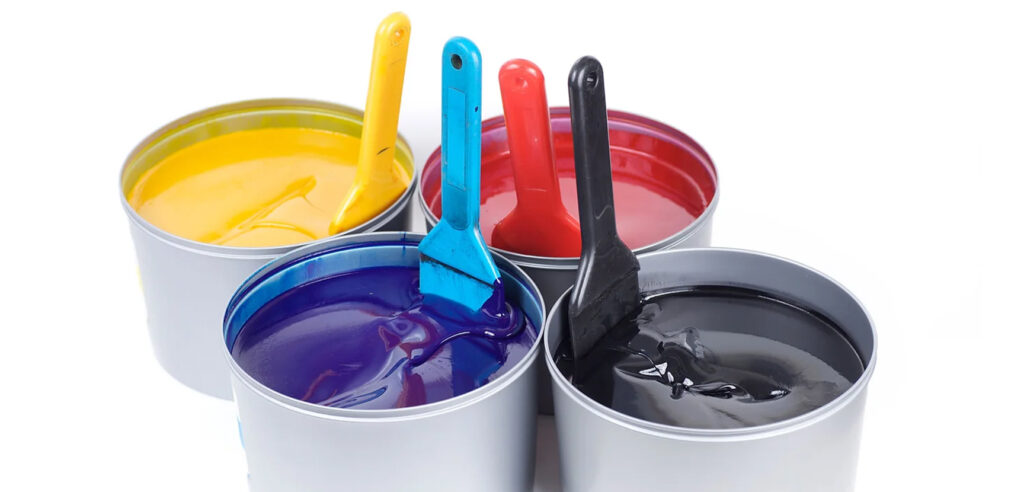
Conventional offset printing ink is composed of several key components, each serving a specific purpose to ensure the ink performs well during the printing process and produces high-quality prints. Here is a breakdown of the typical composition of conventional offset printing ink:
Main Components
Pigments:
- Function: Provide color and opacity.
- Types: Organic and inorganic pigments.
- Examples: Carbon black for black ink, titanium dioxide for white ink, and various other pigments for different colors.
Binders (Resins):
- Function: Bind the pigment particles together and to the substrate.
- Types: Natural resins (e.g., rosin), synthetic resins (e.g., alkyd resins, phenolic resins).
- Properties: Affect the gloss, adhesion, and durability of the printed material.
Solvents:
- Function: Dissolve the binders and control the viscosity of the ink.
- Types: Mineral oils, vegetable oils (e.g., linseed oil, soybean oil).
- Properties: Evaporate during drying, impacting drying time and ink behavior on the press.
Additives:
- Function: Enhance specific properties of the ink.
- Types: Waxes (for rub resistance), driers (to speed up drying), plasticizers (to improve flexibility), stabilizers (to prevent settling), and surfactants (to improve wetting).
- Properties: Tailor the ink for specific printing conditions and requirements.
Detailed Breakdown
Pigments:
- Typically constitute 5-30% of the ink.
- Provide the desired color and contribute to the opacity and permanence of the print.
Binders (Resins):
- Usually make up 15-50% of the ink.
- Form a continuous film that holds the pigment in place and adheres to the printed surface.
- Common resins include rosin, alkyds, phenolics, and acrylics.
Solvents:
- Comprise 20-60% of the ink.
- Influence the flow properties and drying behavior.
- Conventional inks often use mineral oils, but vegetable oils are becoming more popular for environmental reasons.
Additives:
- Generally account for 1-10% of the ink.
- Waxes improve scuff and abrasion resistance.
- Driers (e.g., cobalt and manganese compounds) accelerate oxidation and polymerization of the oils.
- Plasticizers enhance flexibility and prevent cracking.
- Surfactants improve the spreadability and leveling of the ink on the substrate.
Example Formulation
A typical formulation for a conventional offset printing ink might look like this:
- Pigment: 20%
- Binder: 25%
- Solvent: 50%
- Additives: 5%
These components work together to ensure that the ink performs well during the printing process, adheres properly to the substrate, and produces vibrant, durable prints.
Facebook
Twitter
LinkedIn