
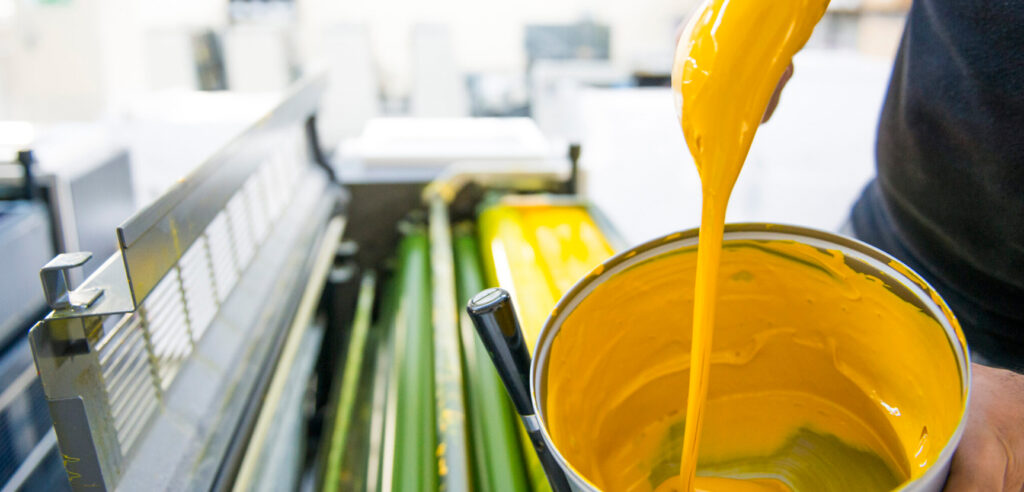
There is a noticeable trend towards switching from conventional inks to UV inks in various printing industries. This shift is driven by several advantages that UV inks offer over traditional solvent-based and water-based inks.
Reasons for the Switch
- Environmental Benefits:
- Low VOC Emissions: UV inks emit significantly lower levels of volatile organic compounds (VOCs), making them more environmentally friendly and safer for workers.
- Energy Efficiency: UV curing consumes less energy compared to conventional drying methods, further reducing the environmental impact.
- Performance Advantages:
- Instant Curing: UV inks cure instantly when exposed to UV light, reducing production times and enabling faster turnaround.
- High Print Quality: UV inks provide superior print quality with sharper images and vibrant colors.
- Durability: UV-cured prints are more resistant to abrasion, chemicals, and fading, making them suitable for high-performance applications.
- Versatility:
- Substrate Compatibility: UV inks can adhere to a wide range of substrates, including non-porous materials like plastics and metals, expanding the possibilities for different printing applications.
- Reduced Waste: The instant curing of UV inks minimizes the risk of smudging and other print defects, leading to less waste.
Industry Adoption
Several sectors are rapidly adopting UV ink technology:
- Packaging: Particularly in food packaging, where low migration UV inks are increasingly preferred for their safety and compliance with regulations.
- Labels: UV inks are widely used in label printing for their excellent adhesion and durability.
- Commercial Printing: Businesses are moving to UV inks to achieve high-quality, durable prints with faster production times.
Challenges and Considerations
Despite the advantages, there are challenges associated with switching to UV inks:
- Initial Investment: The transition requires investment in new equipment, such as UV curing systems, which can be a significant upfront cost.
- Specialized Training: Operators need training to handle UV inks and curing processes effectively.
Conclusion
Overall, the trend towards UV inks is driven by the need for higher quality, faster production, and more sustainable printing solutions. While the transition involves some challenges, the long-term benefits in terms of environmental impact and performance make UV inks an increasingly popular choice in the printing industry.
Facebook
Twitter
LinkedIn